Ethernet & leased lines.
BTnet dedicated internet, resilience, Data Centre Access, security and Wi-Fi.
Explore BTnet ↗The Netify internet reseller programme
Sell business internet to your customers. Ethernet. BTnet leased lines.
Earn first-year upfront commission, paid on install. No targets. No minimum spend.
Explore the provider-billed route, the products you can sell and the support available through Netify. Product availability and commercial terms are confirmed during application.
Apply to Resell Internet ServicesFor IT firms, MSPs and businesses adding connectivity to their customer offer.

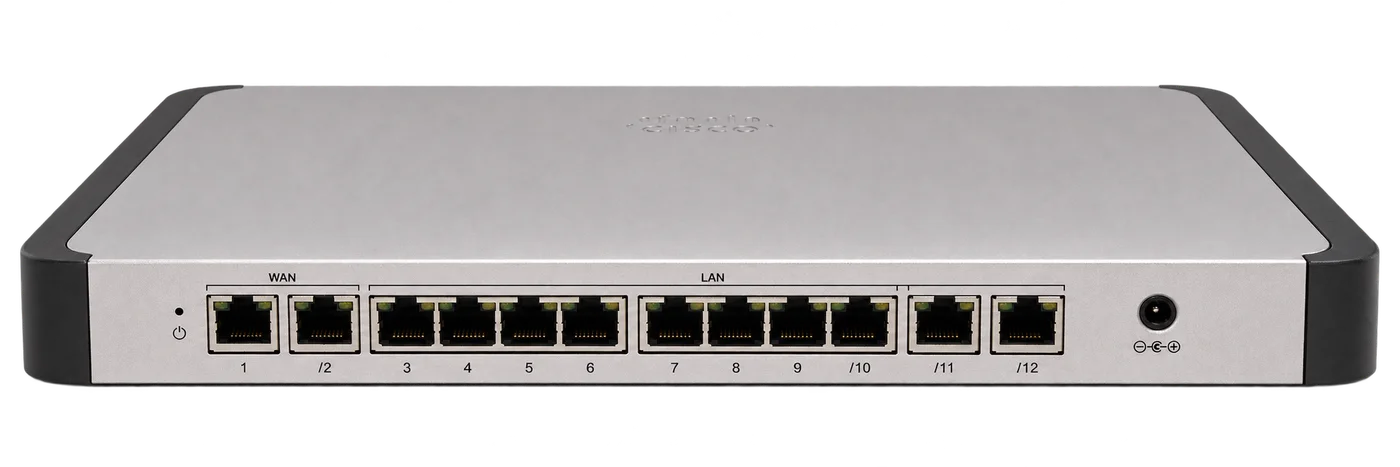 Cisco 8121-G2-MX · Meraki-managed SD-WAN
BT contracts with, delivers, bills and supports the customer on the BT route described here.
YouBring the customer opportunity and confirm the requirements.
NetifySupports the reseller relationship, training and quoting.
BTContracts, delivers, bills and supports the customer.
Your connectivity offer
Start with the customer’s requirements. Choose the right connection, then confirm the provider, delivery scope and commercial terms.
BTnet dedicated internet, resilience, Data Centre Access, security and Wi-Fi.
Explore BTnet ↗Explore the broadband reseller offer, product information and support available through Netify.
Explore broadband ↗Virtual leased lines connect locations privately. Read how they differ from internet access; discuss the available supply route with Netify.
Read the VLL guide ↗Become an internet services reseller
You do not need to operate an ISP network to apply for the provider-billed route described here. This is different from purchasing wholesale capacity and running your own customer billing.
Tell Netify about your business, the products you want to sell and the providers you are interested in.
Review eligibility, product availability, commercial terms and responsibilities with the team.
Confirm the customer’s site, bandwidth, resilience and installation requirements before quoting.
Use the agreed ordering process and confirm delivery, handover and support arrangements.
Your Netify contacts
Abigail supports reseller recruitment, training and sales. Lillie leads administration and brings product and process knowledge across broadband and Cloud Voice.


BTnet products and commercial terms
BTnet terms apply to BTnet. They are not a statement of another provider’s pricing, support or service levels.
2025-26
Verified by BT
Verify with BT ↗Quoted on BT's official partners page
Market-leading BTnet availability commitment
Become an Authorised Reseller of BT Business Internet, BTnet dedicated leased lines from 30Mb to 10Gbps, plus BTnet Data Centre Access, BTnet Security and BTnet Wi-Fi. Netify is a BT Authorised Partner since 2012, BT Cloud Voice Partner of the Year 2025-26. Earn first-year upfront commission on every new BTnet contract you bring in, at the rate confirmed in writing at application. 100% availability SLA. 5-hour target fix. 3 and 5 year terms. BT designs, delivers, bills and supports the service.
Reviewed by Robert Sturt, Managing Director at Netify. Verified against BT Business BTnet product documentation and Netify reseller operations. Reviewed 1 June 2026.
The programme lets accredited UK resellers introduce BTnet dedicated leased lines (and the attached BTnet Data Centre Access, BTnet Security and BTnet Wi-Fi products) to their customers, and earn upfront commission (rate confirmed at application) on the first-year sales-order-value of every new BTnet contract, paid on install across 3 and 5 year terms. Netify is an Authorised Partner of BT, BT Authorised Partner since 2012, and onboards smaller resellers (as Authorised Suppliers) so they can resell BTnet without having to meet BT Wholesale's direct-partner thresholds.
A dealer / commission model with low barrier to entry. Netify onboards you through the Netify Partner Portal as a BT Authorised Reseller. You introduce and sell BTnet leased lines to your customer base. BT designs the solution, delivers the dedicated Ethernet Fibre, bills the customer and runs ongoing support from a UK desk. You earn upfront commissions on install. The programme supports new business, upgrades and re-signs across the BTnet portfolio. Applications are online at netify.co.uk/go/bt-reseller-application/, with no minimum spend and no sales targets.
You earn first-year upfront commission on every new BTnet contract you bring in, paid on install across 3 and 5 year terms, within the published band of 31.5% to 35% of first-year charges. BTnet Security and BTnet Wi-Fi attaches on the same BTnet contract earn on the same first-year basis, ongoing years pay their own published bands, and the Cloud Voice cross-sell on top of any BTnet circuit pays its own separate upfront commission on the Cloud Voice install SOV. The full band table is at netify.co.uk/netify-reseller-programme/; exact rates are confirmed in writing at application, verifiable on netify.co.uk/resell/internet-solutions-reseller/.
There are no claw-backs on contracts that complete their term, and no minimum sales target. Sell one BTnet circuit a quarter or ten a month, you are paid the same per-circuit rate either way. Free standard connection. BT funds the first £2,800 of excess construction charges on every BTnet circuit, so resellers do not lose deals to wayleave-cost shock. Re-signs and in-life upgrades are in scope of the programme.
1. New BTnet circuits per month
2. Contract term
3. Resilience attach (% of circuits)
4. BTnet Security attach (% of circuits)
5. Cloud Voice cross-sell (% of circuits)
Four products under one BT Authorised Reseller agreement, BTnet (Ethernet Fibre leased line, 30Mb to 10Gbps), BTnet Data Centre Access (port-only termination inside third-party UK data centres), BTnet Security (Cisco Meraki + AMP + Sourcefire + Webroot security suite) and BTnet Wi-Fi (Cisco Meraki Wi-Fi 6 access points).
BTnet is the core dedicated leased line, Ethernet Fibre at 30Mb to 10Gbps symmetrical with 1:1 contention, 100% availability SLA, 5-hour target fix and UK latency under 20ms. BTnet Data Centre Access delivers a BTnet connection inside third-party UK data centres in as little as 15 working days, at significantly reduced rentals versus standard BTnet. BTnet Security is included by default on every Meraki-equipped BTnet (customers may opt out); customer pricing is £100/month for 1Gb with small Meraki, £200/month for 1Gb with large Meraki. BTnet Wi-Fi adds Wi-Fi 6 access points from £8/month per AP on a 5-year term when bundled with Security.
BTnet is sold on 3 and 5 year terms. The upfront commission rate is the same on either term, paid against the first-year sales-order-value of the contract on install.
The commercial sweet spot for resellers is typically the 5-year BTnet, maximum customer stickiness, maximum total contract value, and the customer locked in long enough to absorb any market-rate fluctuation. BT funds the first £2,800 of excess construction charges per circuit, which absorbs the most common cause of mid-project delays for the longer-term contracts.
Three options, Failover, Backup with Quick Connect, and Load Balancing. Failover provides a secondary leased line identical to the primary, activated automatically on a primary fault. Backup is a smaller, cheaper secondary line with reduced performance; Quick Connect cuts delivery lead time on the backup. Load Balancing keeps both lines active for traffic management, with auto-failover. All three options carry per-circuit reseller commission on the first-year sales-order-value of the resilience attach, at the rate on the rate card.
Resilience attach lifts average revenue per customer materially. A Failover-attached BTnet contract typically lifts ARPU by 70-90%, since the secondary line is identical to the primary. Backup with Quick Connect adds 30-40%. Load Balancing adds 50-60%. The BTnet Revenue Simulator on this page models resilience attach as an aggregate uplift on the primary BTnet sales-order-value.
No. Netify imposes zero minimum sales spend and zero sales targets on its Authorised Suppliers. No joining fees. No quarterly quota. No risk of losing your reseller code for slow months. Sell one BTnet circuit a quarter or ten a month, you are paid the same per-circuit commission rate either way.
This contrasts with going direct to BT Wholesale, where the full reseller agreement carries minimum spend commitments often exceeding £1m annually plus volume commitments by partner tier. The Netify route is specifically designed for resellers who want the BTnet commercial upside without the volume commitment.
IT companies, MSPs, telecom and connectivity providers, telemarketing and lead-gen agencies, point-of-sale providers and energy brokers, any UK Ltd company already speaking to other UK businesses that would benefit from a dedicated leased line.
You do not need prior telecoms experience. Netify provides product training, sales collateral, quoting tools and a named partner manager as part of onboarding. You do need to be a UK Ltd company, have a business bank account, and pass standard credit and compliance checks. Existing customer relationships translate directly into BTnet sales, companies with poor business broadband but high connectivity expectations are the strongest conversion segment.
Three practical differences: minimum spend, joining fees and operational burden. BT Wholesale direct typically requires minimum annual spend often exceeding £1m plus volume commitments by partner tier. Netify imposes neither. Netify pays you upfront commission against first-year sales-order-value on every install; BT Wholesale pricing varies by partner tier, service mix, volume and geography.
Direct BT Wholesale partners place orders, manage compliance, and own more of the customer service stack. Authorised Suppliers under Netify use Netify's tooling for quoting and ordering, and BT handles customer service. Going direct makes sense if you are already moving substantial BT data product annually; for everyone else, Netify exists. The Netify application is online at netify.co.uk/go/bt-reseller-application/ and timing depends on your application and the checks required.
BTnet supports BT Cloud Voice and SIP trunk services with Quality of Service voice prioritisation built in. Resellers can attach Cloud Voice to any BTnet circuit and earn a separate upfront commission on the Cloud Voice install across 36 and 60 month Cloud Voice contracts. This is in addition to the BTnet first-year commission on the underlying leased line.
Common pattern for VoIP-led MSPs converting customers from PSTN, sell the BTnet circuit for the SLA-backed dedicated connection, attach Cloud Voice on top for the voice migration. The Cloud Voice attach commission is paid against the Cloud Voice contract length, not the BTnet contract length, so a 3-year BTnet circuit can carry a 5-year Cloud Voice attach with the commission paid on Cloud Voice install.
BTnet over Ethernet Fibre depends on civils requirements, typically 60-90 working days for sites that don't require significant new construction. BT funds the first £2,800 of excess construction charges per circuit, which absorbs the most common cause of mid-project delays. BTnet Data Centre Access delivers in as little as 15 working days because access nodes already exist inside the supported third-party UK data centres.
Quick Connect on Backup resilience orders can compress secondary-line delivery further. The reseller sees order status through the Netify Partner Portal; BT handles the field engineering visit, customer install and acceptance. Commission is paid by Netify within 30 days of the customer's first invoice being collected by BT.
BT dedicated internet access from 30Mb to 10Gbps over Ethernet Fibre. Symmetrical upload and download speeds. 1:1 contention ratio (fully uncontended). Unlimited usage with no fair usage policy. UK latency under 20ms. 100% availability SLA. Five-hour target fix time. Free standard allocation of IPv4 static addresses. Online bandwidth utilisation and reporting included free. Free standard connection on 3 and 5 year terms. £2,800 contribution to excess construction charges funded by BT. Optimised for voice and applications including BT Cloud Voice and SIP trunk services with Quality of Service prioritisation. Managed equipment with engineer installation. Cisco Meraki router available for integrated Wi-Fi, Guest Wi-Fi and Simple LAN, with BTnet Security included.
Dedicated BTnet internet connection for customers in third-party UK data centres. A range of UK data centres operate as access nodes to the BT network. Port-only (wires only) termination in the Data Centre MeetMe room, with the customer ordering a cross connect from the data centre supplier back to their rack space. Speeds up to 10Gbps depending on the data centre. Significantly reduced rentals compared with normal circuit delivery. Up and running in as little as 15 working days. 100% availability SLA, five-hour target fix time and 24/7 UK support apply.
Included as standard with every BTnet circuit ordered with Cisco Meraki equipment. Customers may opt out. Cisco AMP-powered anti-malware (database of over 500 million files, 1.5 million malware samples per day, 13 hour time to detect versus an industry standard of around 100 days). Cisco Sourcefire SNORT intrusion detection and prevention. Webroot BrightCloud content filtering across categories including Adult, Hacking, Malware sites, Phishing, Bot nets, Hate, Nudity, Proxy avoidance, Confirmed SPAM, Illegal, Parked domains, SPAM URLs, Keyloggers and Spyware. Layer 3 firewall outbound allow / inbound block. Layer 7 application firewall blocking peer-to-peer and web file sharing applications. Pricing: £100 per month for 1Gb with small Cisco Meraki router (up to 500Mb max). £200 per month for 1Gb with large Cisco Meraki router. Templated to popular settings, easily reconfigured per customer.
Dedicated, fast Wi-Fi solution from BT, integrated end-to-end with the BTnet service. Wi-Fi 6 for faster speeds, increased capacity and improved security. Dedicated scanning radio for optimised performance. Cisco Meraki access points. Engineer installation, automatic updates and licence management included. One access point free of charge. Up to 4 additional access points each on a monthly fee. Pricing per access point: 1-year term at £200 upfront and £20 per month standalone (£18 per month with Security). 3-year term at zero upfront and £15 per month (£13 per month with Security). 5-year term at zero upfront and £10 per month (£8 per month with Security). Wired or mesh setup. Wi-Fi for employees and guests with separate guest network and advanced controls.
Failover: BT manages a secondary leased line identical to the primary BTnet line. Activates automatically if the primary line has a problem so the customer service continues to operate as normal. Backup with Quick Connect: a smaller, cheaper secondary line acts as backup with reduced performance. Quick Connect on backup orders gives faster delivery lead times. Load Balancing: secondary line stays active at all times, allowing the customer to manage traffic across both lines. Traffic auto-routes to the active line if one fails. All three resilience options add per-circuit reseller commission and lift average revenue per customer.
BTnet supports BT Cloud Voice and SIP trunk services with Quality of Service voice prioritisation. Reseller can cross-sell BT Cloud Voice on top of any BTnet circuit, with the Cloud Voice install paying its own commission in addition to the BTnet commission. Common pattern for VoIP-led MSPs converting customers from PSTN.
| Product | Aimed at | Speeds | Underlying access | SLA | Commission basis |
|---|---|---|---|---|---|
| BTnet | Mid-market and larger businesses needing dedicated, uncontended internet | 30Mb to 10Gbps symmetrical | Ethernet Fibre | 100% availability, 5-hour fix | Upfront on install, against first-year sales-order-value, on 3 and 5 year terms |
| BTnet Data Centre Access | Customers with presence in third-party UK data centres | Up to 10Gbps (data centre dependent) | Port-only termination, customer cross connect | 100% availability, 5-hour fix, 15 working day delivery | Same as BTnet |
| BTnet Security | Add-on for every BTnet circuit with Cisco Meraki equipment | N/A (security layer) | Integrated with BTnet circuit | Inherits BTnet SLA | Recurring monthly margin (£100-£200/month per circuit) |
| BTnet Wi-Fi | Add-on for BTnet customers wanting integrated Wi-Fi 6 | Wi-Fi 6 access point | Cisco Meraki access points, mesh or wired | Inherits BTnet SLA | Recurring monthly margin (£8-£20/month per access point depending on term) |
| Factor | Netify BT Reseller Programme | BT Wholesale direct |
|---|---|---|
| Minimum spend | No minimum spend | Typically exceeds £1m annually |
| Targets | Zero minimum sales targets | Volume commitments by partner tier |
| Joining fees | No joining fees | Partner Plus tier programme |
| Operational burden | Low. BT designs, delivers, bills and supports | Higher. Partner manages more of the stack |
| Commission | Upfront on first-year sales-order-value, on 3 and 5 year terms | Pricing varies by partner tier, service mix, volume and geography |
| Best for | IT companies, MSPs, telecom providers and connectivity partners seeking a fast entry into Business Internet reselling | Established resellers with substantial existing data business and nationwide service demand |
Take a pipeline of 5 new BTnet circuits per month on 3-year terms, with 30% of circuits attaching a Cloud Voice cross-sell. For an IT company or MSP with an existing base of connectivity customers, this volume is realistic inside the first year of the programme. BTnet commission is paid one-off on install against the first-year sales-order-value of each circuit, with the Cloud Voice line paying its own commission on top. A partner manager prices this exact pipeline in writing on request, usually within one working day. The same volume would not qualify for BT Wholesale direct partnership, which typically requires substantial annual committed spend.
Try your own circuit volume in the simulator →Every credential and headline figure on this page can be independently verified through these third-party sources.
Netify is listed here. Robert Sturt, MD, is quoted by name. Independent third-party verification of the BT Authorised Partner status claimed on this page.
UK Companies House record. Confirms Netify Group Limited as a UK-registered Ltd company (Company No. 07087612) operating since 2010.
Netify is a UK registered trademark (UK00003413742). Confirms the brand identity used throughout this page.
Annual UK telecoms market data including business leased line connections. Useful context for sizing the addressable customer base for a BTnet reseller.
This page describes the Netify Reseller Programme for BT Business Internet (BTnet leased lines), one of four offerings Netify operates. The other three are the BT Business Broadband partner programme, the vendor marketplace and the RFP builder, each with its own commission model and audience.
Before you apply
Choose the connectivity products and providers you want to sell, then complete the Netify application. The team reviews your business and confirms the available routes, support and commercial terms before you start.
You can apply to sell established providers’ internet services through Netify. The BT route described here is provider-billed: BT contracts with, delivers, bills and supports the customer. It is not an offer to operate your own ISP network or buy wholesale capacity for your own billing platform.
Yes. Netify has a broadband reseller route and a BTnet leased-line route. Product availability and the provider arrangements are confirmed during application. The BTnet commercial and technical detail below applies to BTnet; it should not be applied to another provider.
Start with the customer’s site, bandwidth, resilience and installation requirements. Use those requirements to prepare a dedicated-connectivity quotation, confirm the delivery scope and charges, and agree who handles the order and support. BTnet product, quotation and installation detail is retained below.
No. On the BT route described here, BT bills the customer. Netify supports the reseller relationship, with product training and quoting support described in the programme reference below.
Apply with your business details and discuss the customer opportunity with Netify. Confirm the installation address, required bandwidth, contract term and resilience requirements. The pricing calculator below provides an estimate; a site-specific quote and the applicable order terms must be confirmed.
BT Business Internet is BTnet, BT dedicated leased line internet access for UK businesses. Symmetrical upload and download speeds from 30Mb to 10Gbps. 1:1 contention. Unlimited data with no fair usage policy. 100% availability SLA. 5-hour target fix. UK latency under 20ms. BTnet Data Centre Access delivers the same BTnet connection inside third-party UK data centres in as little as 15 working days.
No. The programme is restricted to UK-registered Ltd companies.
No. There are no joining fees, monthly platform fees or per-feature fees.
BTnet Security is included as standard on every BTnet circuit ordered with Cisco Meraki equipment. Customers may opt out. Layer 7 firewall, Cisco AMP anti-malware, Webroot BrightCloud content filtering, Cisco Sourcefire SNORT intrusion detection and prevention. Pricing: £100/month for 1Gb with small Meraki router, £200/month for 1Gb with large Meraki router.
100% availability Service Level Agreement, market-leading among UK dedicated internet providers. Service credits apply if the SLA is missed. 5-hour target fix time on any BTnet fault, 24/7 UK-based support. UK latency under 20ms.
Yes. BTnet is optimised for voice and applications. Cross-sell BT Cloud Voice and SIP trunks on top of any BTnet circuit with Quality of Service voice prioritisation. The Cloud Voice cross-sell pays its own commission on install across 36 and 60 month contracts.
BTnet Data Centre Access provides a dedicated BTnet internet connection inside third-party UK data centres. BT operates access nodes in a range of UK data centres. The customer takes a port-only (wires only) termination in the Data Centre MeetMe room and orders a cross-connect from the data centre supplier back to their rack space. Speeds up to 10Gbps depending on the data centre, delivered in as little as 15 working days at significantly reduced rentals.
BT. BT owns the service contract, provisioning, ongoing operations, training and billing. The reseller remains the commercial relationship holder for renewals, upgrades and additional circuits.
Customer quotation reference
BTnet cost calculator and pricing guide. Estimates are not reseller earnings or confirmed customer quotations.
Guide updated 29 September 2026 · Calculator prices reviewed 20 July 2026
Expect £250 to £950 a month ex VAT for a BTnet dedicated leased line at 100Mb to 1Gb, around £1,800 to £3,200 at 10Gb. Configure your circuit to see an indicative estimate, then request a site-specific BTnet quote using your work email and installation postcode.
Your estimate updates as you change the circuit options.
These figures are indicative. Request a site-specific quote above for a confirmed BT price.
Typical monthly rental
£320
per month, ex VAT
Indicative range
£280 - £420
site-specific: fibre presence and civils
3-year term total
£11,520
at the typical monthly figure
Prefer to talk it through? Call 0333 202 1011 for BTnet pricing.
Circuit rentals are indicative Netify market estimates, not a BT quote: BTnet pricing is generated per site by BT and varies with existing fibre, distance and civils. Free standard connection applies on 3 and 5 year terms and BT funds the first £2,800 of excess construction charges per circuit. BTnet Security and Wi-Fi access point prices are published BT figures. All figures ex VAT.
A BT leased line, known as BTnet, gives your business a dedicated, symmetrical connection direct to BT's network. Whether you're pricing your first BT business leased line or checking a quote you've already been given, the calculator above gives you an indicative monthly cost in minutes.
Netify is an independent UK connectivity marketplace and BT Authorised Partner. Once you're ready, open your secure quote room and we'll confirm your best price directly with BT.
We've designed our calculator for the following three types of buyer:
Budgeting a first circuit: Organisations that are establishing an initial budget for their first leased line or dedicated internet connection, with no pre-existing BT quote to compare against.
Upgrading from broadband: Multi-site organisations that are considering the move from Fibre-to-the-Premises (FTTP) or Single Order Generic Ethernet Access (SOGEA) broadband connections - typically looking for symmetrical speeds, an uncontended circuit or SLAs (that broadband can't offer).
Checking a quote: Procurement teams who have already got a BT quote but would like to check it against the market before signing anything.
For Resellers: If you're an IT company or MSP looking to start reselling BTnet to your own customers, we'd recommend that you visit our BT Business Internet reseller programme page, where we've broken down pricing and commercial terms.
A BT leased line (or BTnet), is a dedicated fibre circuit connected directly from your premises to BT's network for uncontended connectivity - unlike BT's broadband offering which connects into a shared, aggregated access point, allowing your organisation to benefit from not having to share it's connection with other customers at the circuit level and enabling you to harness the full bandwidth of the connection.
With a dedicated BTnet connection, you'll have access to symmetrical upload and download speeds, meaning that uploading large files, backing up to the cloud or hosting outbound video calls perform just as well as downloading does. Broadband on the other hand, including FTTP, remains asymmetrical, with upload speeds typically well below download speeds, and performance that can vary with contention on the shared network.
Another benefit of BTnet circuits not being shared is that it also supports lower and more predictable latency and jitter than a typical broadband connection - BT publishes latency guarantees of 20 milliseconds or less on its UK core network and 95 milliseconds or less on the transatlantic network - meaning that your real-time traffic (such as voice calls, video conferencing and other time-sensitive cloud applications) are best positioned to perform well, unlike with a shared connection, which is more prone to variable performance at busy times.
Bandwidth and bearers: BTnet bandwidth scales from lower business tiers up to multi-gigabit circuits, delivered on 1Gb or 10Gb bearers, and ordering a larger bearer than you need today (for example provisioning a 1Gb bearer even if your current requirement is lower) means you can increase bandwidth later as a straightforward configuration change rather than a new circuit build.
BTnet versus broadband at a glance: In summary, BTnet circuits are a dedicated connectivity solution for your business that can outperform the likes of shared broadband, offering benefits such as symmetrical speeds rather than asymmetrical, and comes with SLAs to protect your operations on availability, performance and fix times. The only downside to BTnet being that broadband remains the lower-cost, higher-availability alternative for organisations whose needs don't yet demand a dedicated circuit.
BTnet comes backed by a service level agreement covering availability, network performance and delivery, with service credits kicking in if BT misses its own targets. BT commits to 100% service availability, aims to fix faults within five hours day or night, and guarantees latency of 20 milliseconds or less on its UK core network, or 95 milliseconds or less across the transatlantic network, whilst support is UK-based and available 24/7. Full SLA terms are published at bt.com/terms.
Traffic on a BTnet circuit largely stays on BT's own UK, European and Global IP network, rather than crossing onto other providers' infrastructure along the way. Fewer hops on a single network tends to help the performance of cloud applications, voice and video in particular, where consistency ends up mattering just as much as raw bandwidth.
Where downtime would genuinely hurt the business, BTnet offers two resilience options: Failover, where a second circuit takes over automatically the moment the primary line fails, and Load Balancing, where both circuits stay active together and share the traffic, so the surviving line simply carries the full load if one goes down. Each is delivered as a second Openreach circuit running alongside your primary line.
Resilient circuits can go a step further too, architected with genuinely diverse routing so the two circuits enter the building via different physical paths and, subject to survey, originate from separate exchanges, with their own equipment at each connection point. That cuts down, though it can't remove entirely, the risk of one fault taking out the whole connection. How much diversity is actually achievable comes down to the specific building and site, and only gets confirmed once the survey's back.
BTnet pairs with a standard router, a Cisco Meraki appliance, or a Fortinet device, each available as an optional add-on. Depending on which device and licence you go for, this can bring a cloud-managed firewall, intrusion detection and prevention, malware inspection, and content or web filtering to control what users can actually access, with built-in Wi-Fi thrown in on the Meraki option. These security features sit inside a wider SASE (Secure Access Service Edge) approach, where SD-WAN forms one part of a converged network and security service rather than standing alone as a separate product. Exactly what's included, and what's optional, gets confirmed once we scope your specific circuit.
Scope clarification: BTnet Security is the Cisco Meraki option. A Fortinet managed firewall, SD-WAN or SASE service is separately scoped and quoted; it is not included automatically with the leased line. Wi-Fi and security capabilities depend on the equipment and licences ordered. Compare the BT security routes.
BTnet is built to work well alongside cloud platforms such as Google Workspace, Microsoft Azure and AWS, and gets commonly paired with BT Cloud Voice or other SIP-based calling. Quality of Service settings mean you can prioritise voice and video traffic ahead of other data, and combined with BTnet's low latency and symmetrical bandwidth, that adds up to a more consistent calling and conferencing experience than a shared connection can typically manage.
We’ve typically seen BTnet leased line prices vary due to a number of factors, with the more common ones including:
Bandwidth and bearer: A higher bandwidth tier comes at a higher cost, and the bearer size you order on (1Gb or 10Gb) has a similar effect on price too. We would, wherever possible, recommend ordering a larger bearer than your current bandwidth need, for example a 1Gb bearer for a lower initial speed, as this will allow you scale up later without new civil works.
Existing fibre at the site: Buildings already served by BT fibre typically price at the lower end of a band and install faster than sites needing new fibre installation.
Contract term: Longer terms typically comes with lower costs, bringing the monthly rental down in exchange for a longer commitment, so it's worth weighing the saving against how likely you are to move site (or want to retender sooner).
Delivery location: Circuits delivered into a supported UK data centre are typically cheaper and quicker to install than premises delivery, primarily due to access infrastructure already being in place.
Resilience: Failover, Load Balancing and lower-cost backup options each affect the price differently - a second full circuit will cost more than a backup broadband connection.
Excess construction: A standard contribution toward excess construction costs applies on most orders – and rural or harder-to-reach sites can exceed this.
Security: Your choice of edge device (standard router, Cisco Meraki or Fortinet), any additional licences, and additional Wi-Fi access points where needed can all come at an extra cost.
Most buyers fix on the monthly cost and overlook the lead time entirely. Delivery into a supported UK data centre tends to move considerably faster than delivery to your own premises, especially where new fibre or civil works turn out to be needed on site, so your project timeline is better built around what the survey actually finds rather than a headline delivery figure, decoupling your fit-out dates from the order date wherever that's possible until the survey's back.
It's also worth considering a larger bearer than your initial bandwidth actually needs. The monthly cost creeps up a little, but it means stepping up to a higher speed later becomes a simple configuration change rather than a whole new circuit build, which counts for a lot if you're expecting the business to need more bandwidth before the contract term's up.
Resilience tends to be the classic afterthought. Add Failover or Load Balancing once you're already live and you're effectively starting a second delivery project from nothing, complete with its own survey and lead time, so deciding whether downtime would genuinely hurt the business is far better done before the original order goes in than after an outage's already happened. There's also a lower-cost backup connection available for organisations wanting some protection without paying for a second full leased line.
Lastly, build contingency into the budget. Excess construction costs and any further civil works only get confirmed once the site survey's back, and rural or awkward locations run a much higher chance of exceeding the standard construction allowance than urban sites already close to existing fibre.
Once your order is placed, delivery moves through five main stages, delivered jointly by BT and Openreach.
Openreach runs an initial survey to work out the route from your local BT exchange to your premises, and to check whether any resilience or diversity options you've ordered can actually be delivered. That survey covers circuit path feasibility, any geographical obstacles such as waterways or motorways, and whether a street works licence is needed for work on public highways. Where the survey turns up significant excess construction work, you can cancel the order without penalty before committing any further.
Scope clarification: Cancellation rights, survey costs and any charges depend on the applicable BT order and terms. Obtain written confirmation before cancelling; a survey does not create an unconditional right to cancel every order without charges. BTnet service schedule.
Where cables need to cross third-party land, or where structural changes such as poles, masts or work to a listed building come into play, the relevant permissions and wayleave agreements have to be in place before any work can start. Landlord negotiations over wayleave terms, along with local authority approvals for planning permission or listed building consent, tend to be the most common source of delay at this stage, so getting in touch with your landlord early can genuinely help keep things moving.
Where new ducting or trenching's needed, groundwork gets carried out to lay cabling beneath pavements, roads or private land, which can itself call for a street works licence or landowner consent. From there, fibre gets pulled or blown through existing or new ducts from the exchange to your premises and spliced in, with the circuit terminating at an Optical Network Terminal (ONT) on site. Adding a second circuit for diversity can stretch this stage out further still, since a genuinely separate physical route has to be found or built from scratch.
BT installs and configures your chosen router, whether that's a standard router or a Cisco Meraki appliance, along with your IP addressing and any additional security or SD-WAN configuration. The choice of device affects what's available afterwards: a Meraki appliance adds built-in Wi-Fi and a cloud-managed dashboard alongside the security options described above.
Before handover, BT runs bit error rate, latency and throughput tests to confirm the circuit meets the agreed specification, and configures routing protocols so your network is fully connected to the internet. Service is considered delivered once your managed equipment and dedicated circuit are both in place.
BT confirms a customer committed date (CCD) once your site survey is complete. For complex deliveries, BT may instead provide an expected completion date (ECD), which isn't covered by the delivery SLA. If BT misses the CCD, you're entitled to service credits against your connection charge, scaled to the length of the delay.
Once live, your circuit is covered by 24/7 UK-based support and BT's service level agreement, with BT aiming to fix faults within five hours. Basic bandwidth monitoring is available as standard, with more granular reporting on latency and packet loss available through the Meraki dashboard where that device is in use. If you need to change bandwidth later, upgrading is handled as a modify order rather than a new circuit build, which is one of the reasons ordering on a larger bearer than you currently need can be worthwhile. It's also worth reviewing your circuit's capacity periodically, and planning your own backup or disaster recovery approach, so the service continues to match how the business is actually using it.
Reliable connectivity underpins everything from live online lessons and research computing to exam systems and day-to-day administration. A BTnet leased line gives schools, colleges and universities a dedicated, symmetrical connection, so learning management systems, cloud applications and video conferencing keep performing consistently, including during peak periods such as exams or the start of term, when many broadband connections would show the effects of shared, contended bandwidth.
Bigger campuses typically need a network that can flex across lecture halls, research labs and multiple buildings, ideally with centralised visibility and control rather than managing each building separately. A cloud-managed approach makes it easier to adapt to changing usage across a large site, monitor network health, and scale Wi-Fi and security consistently as the campus grows, without each addition becoming a separate project.
Smaller school sites benefit from the same dedicated connectivity with simpler, centrally managed security, without needing extensive in-house IT expertise. Built-in identity-based access control, DNS protection and automated firmware updates on the security appliance mean day-to-day administration doesn't need to fall to teaching staff or a small IT team stretched across other duties.
Scope clarification: The leased line itself does not provide identity-based access control or DNS protection. Confirm these features, Wi-Fi hardware, licensing and management responsibilities in the proposed security design. BT security products and responsibilities.
Cybersecurity is a growing priority in education, particularly with the rise of bring-your-own-device access across campus and home working, and the amount of sensitive student and staff data institutions hold. BTnet leased lines can be paired with Meraki or Fortinet security options, giving institutions firewall protection and content or web filtering to manage what students can access, alongside threat monitoring, depending on the device and licence chosen.
When budgeting for a leased line, plan around your academic calendar rather than just the monthly cost. Ordering early, and building in time for the site survey, any permissions and civil works, and testing, makes it less likely that installation work lands during term time or exam periods. As with any leased line, contract term and bandwidth choice are the two levers with the biggest effect on ongoing cost, so it's worth sizing bandwidth to genuine peak usage (live lessons, exams and research computing) rather than average day-to-day traffic.
The cost of a BT leased line typically comes down to the amount of bandwidth you opt for, the length of contract chosen, delivery location and any resilience options you choose to add on top, therefore we strongly recommend configuring your circuit in the calculator above to get a full indicative monthly range, which you can then open into a secure quote room whenever you're ready for your confirmed price (straight from BT).
Quotes change based on bandwidth and bearer size (alongside the likes of contract term, delivery location, any excess construction work the survey turns up, and whatever resilience or security options get added on top) - meaning that even two sites in the same town can actually have two vastly different figures once local fibre presence and civil engineering needs come into play.
Yes - standard connection is included on qualifying contract terms, as well as wherever a site survey shows that additional civil engineering work is required, BT will put a contribution toward the excess construction costs, and you'll get a quote for anything above that before you're locked into the order at all.
Scope clarification: Connection allowances and any cancellation rights are subject to the agreed order and applicable BT terms. Confirm the survey outcome and any excess charges in writing. BTnet service schedule.
As to be expected, with longer contract terms comes greater discounts, bringing the monthly rental down in exchange for a longer commitment. We’d recommend considering your refresh cycles, line affordability and weighing the saving against how likely you are to move site or want to retender sooner.
BTnet is a dedicated, uncontended circuit with symmetrical upload and download speeds, meanwhile broadband is shared with other customers on the network and is typically asymmetrical. This makes BTnet better suited to businesses that depend on consistent performance for cloud applications, voice or video.
The easiest way to differentiate failover and load balancing is that load balancing is the always active component that splits traffic over multiple circuits to maximise performance, meanwhile failover keeps a second circuit on standby, which takes over automatically if your primary line fails.
Yes – BT allows you to upgrade your bandwidth but only if you order on a bearer larger than your current bandwidth need, all of which is handled as a configuration change rather than a new circuit build.
Yes - BTnet's dedicated, low-latency connection is specifically designed to support consistent performance for cloud platforms and multi-cloud set-ups across all of these platforms.
To get the best BTnet price, we’d recommend that you start by configuring your circuit in our price calculator above to view potential quotes, then open your secure quote room with a work email. A Netify BT specialist takes your exact scenario to BT's pricing desk, and your best price is sent to you usually within one working day.
BTnet includes 24/7 UK-based support, with BT aiming to fix faults within five hours.
No - BTnet is actually used by organisations of all sizes, from small and medium-sized businesses through to large enterprises, with the bandwidth, resilience and security options all scaled to match these differing business needs
A dedicated, symmetrical connection helps online learning platforms, cloud applications and video conferencing run consistently, including during peak periods such as exams or the start of term, and supports the security and content controls institutions need for student and staff access.
At Netify, we typically see that most BTnet buyers also opt for BT Cloud Voice for calling. With us, you can also price per-user licences, call plans and handsets via our BT Cloud Voice pricing calculator.
If you're an IT company or MSP, Netify's Reseller Programme of BT products and services lets you resell BT Business Internet and BTnet leased lines to your own customers, backed by Netify's experience as a BT Authorised Partner and our existing relationship with BT's pricing desk.
Rather than pricing each deal from scratch, you get access to the same underlying BT product set covered on our buyer-facing pages, with channel terms and onboarding handled through the Reseller Programme rather than through the calculator above.
This calculator and the estimate_btnet_cost tool on the Netify assistant connector run the same pricing model, and request_btnet_best_price opens your secure quote room, where Netify confirms your best price directly with BT. If your assistant supports connectors, paste this prompt:
Using the Netify connector at https://netify.co.uk/api/mcp/, run estimate_btnet_cost for my site: ask me for bandwidth, contract term, delivery location, resilience and security, then give me the indicative monthly range. When I want the confirmed best price, ask for my business email and consent, run request_btnet_best_price, and check get_btnet_quote_status until my figure lands in the secure quote room.
Setup instructions for Claude, ChatGPT and other clients are on the assistant connector page. The full pricing model behind this page is published at data.json.
Netify have been an Authorised Partner of BT since 2012, therefore we’ve built our cost calculator and rental bands from our quoting experience, with the prices last reviewed on the 20 July 2026. Circuit rentals are deliberately shown as ranges because BTnet pricing is generated per site by BT. BTnet Security, Wi-Fi access point pricing, the free standard connection, the £2,800 construction contribution, the 100% availability SLA and the five-hour fix target are published BT figures. Netify is listed on the official BT Business authorised partners directory. Robert Sturt, Managing Director, is the named reviewer for the accuracy of this page.
“I need a price for a leased line for our site.”
If that sentence is yours and phones or device protection are on the same list, describe your business once and price all three together. Continue in BT Business, through Netify. The calculator above stays the deep tool for this page's question.
Leased-line guides
Product, installation, security and education guides. Check historical claims and prices against the current quotation and supplier terms.
BT Business What is a BT Leased Line? (BTnet) Robert Sturt · 21 July 2023 · Updated 23 April 2026 · 8 min read.
While Broadband may now offer similar download speeds, BTnet leased lines provide a dedicated circuit that is installed directly to your business with symmetrical upload and download speeds. As the BTnet service is a dedicated connection, you are not sharing the service with other customers at the circuit level which helps improve latency and jitter at the same time as avoiding congestion. Broadband customers connect to an aggregated bandwidth point which is shared and engineered across their customer base. In comparison, BT leased lines do not shared connectivity between customers.
 Robert Sturt

Deeper Dive: Netify Compares BT Leased Lines vs BT Broadband
As you will read in this article, BTnet offers the option of Meraki Cybersecurity which includes malware protection, breach detection, firewall capability, content filtering, web filtering and endpoint protection. And while BT Broadband does offer security, the features are not comparable to Meraki.
BTnet aims for 100% target availability with 24/7 support if general support is required for the leased line service. Their aim is to fix faults within five hours regardless of the time of day or night. If an outage occurs, BT provide a money-back credit as part of their commitment to maintaining their 100% target service level availability.
It is worth knowing that the maximum compensation in a quarter is capped at the equivalent of ten days rental charge. If you order resilient circuits and experience an outage, BT will adjust the rental charges for both your main and backup connections.
In terms of installation lead-time SLA, BT will confirm the CCD (Committed Delivery Date) once they have completed your initial site survey. The site survey is conducted by Openreach to understand the level of work required to deliver your BTnet circuit. In some instances, excess construction charges (ECC's) may apply depending on the engineering tasks needed to install your leased line. Any ECC's are disclosed at site survey stage - at this point, you can cancel the service without penalties if the costs are too high.
In the case of complex deliveries, BT may not be able to provide a CCD. Instead, they'll will provide you with an expected completion date (ECD) - note that these scenarios are not covered by the BT service level agreement (SLA).
BT consider the service delivered once they have provided the managed customer premises equipment (CPE) with configuration and service tests to ensure the circuit is connected. If BT fail to meet the CCD, they will provide on-time delivery service credits. This means you will receive a discount on the connection charge based on the delay in delivery. The reduction in connection charges will be as follows:
What support do BT leased lines offer? BTnet support is provided via their dedicated phone line on 0808 100 2440 which is available 24/7.
One of the options for BTnet leased lines is Meraki Cybersecurity which has fast become essential due to the rise of cyber threats and data breaches-robust security measures are crucial for any business.
BT with Meraki offers malware protection to protect your network from harmful software that could compromise your data or cause general disruption. The BTnet Meraki malware capability is constantly monitoring for potential threats at the same time as providing real-time protection and alerts so your business can take immediate action to mitigate any risks.
In addition to BTnet malware protection, Cisco Meraki Security also includes breach detection capabilities. This means that any breaches in your network security will be quickly detected which enables you to respond and take action as required. By identifying potential threats on an almost realtime basis, you can minimise the impact and prevent any further damage.
Another important feature of BTnet Cisco Meraki Security is its firewall capability. The Meraki firewall prevents unauthorised access to your network by blocking specific traffic based on type - e.g. port number or application type.
BTnet Meraki Security offers content filtering and web filtering features allowing you to control access to potentially harmful websites and content which ensures that your employees are only accessing safe and appropriate content during work hours.
With BYoD (Bring your own device), Cisco Meraki Security is necessary to secure endpoints which includes mobiles, tablets and laptops. The Meraki capability is designed to secure entry points so that all devices are protected against potential vulnerabilities.
With malware protection, breach detection, firewall capability, content filtering, web filtering and endpoint protection, Meraki offers a complete security solution in partnership with BTnet leased lines.
BTnet offers a Service Level Agreement (SLA) that guarantees 100% availability of the service, subject to the terms of the agreement. If there is an outage, BTnet will reduce your rental charge for the service by one day's rental charge per hour of downtime. The maximum reduction applied per quarter will be capped at ten hours of outage which is equivalent to ten days' rental charge for your service.
BTnet also guarantees an average round-trip transmission time of 20 milliseconds or less between BT core PoPs (Point of Presence). For the transatlantic network connection, the latency guarantee is an average round-trip transmission time of 95 milliseconds or less between designated transit routers at each end of the transatlantic link.
If BTnet does not meet the latency guarantee for two consecutive months, they will provide a discount equivalent to one day's rental charge for your service.
Table of Key Points
BT leased lines offer a dedicated and symmetrical connection, meaning that the upload and download speeds are the same (unlike Broadband). This ensures that even if upstream bandwidth is constrained, your Cloud Voice calls are not. impacted. In addition, the performance of leased lines offers the best possible latency and jitter with the BTnet 100% uptime guarantee.
One key enabler to Cloud Voice is the ability to prioritise voice traffic which also ensures optimal call quality. BTnet QoS positions businesses to allocate a specific percentage of bandwidth for voice traffic which translates to a consistent calling experience. This ensures that voice calls are given priority over other types of internet traffic, such as file downloads or video streaming.
BT provides scalable bandwidth options that allow businesses to easily adjust their connection speed as requirements evolve. BTnet leased lines offer lower bandwidth options starting from as low as 100 Mbps through to load balanced 10 Gbps circuits.
If your business demands more bandwidth due to larger team sizes, frequent use of cloud applications or the need for high-quality video conferencing, BTnet leased lines also provide higher bandwidth options with the flexibility to tailor their connection to their specific needs. This ensures that you are not paying for more bandwidth than you require or experiencing any performance issues due to insufficient capacity.
BT leased lines offer load balancing options to help businesses optimise their network by distributing network traffic evenly across dual leased lines. If one leased line experiences an outage, the traffic can be automatically redirected to other available line which ensures uninterrupted connectivity.
We touched on this within the Cloud Voice section earlier, BTnet is also available with Meraki Intelligent single site SD WAN which enables your business to prioritise certain types of traffic, i.e. Voice vs Email. This ensures that critical applications receive the necessary bandwidth and quality of service to deliver a smooth and seamless user experience.
The first resilience option (RA01) offered by BT encompasses a service that includes a dual fibre connection with auto-changeover hardware. This service ensures uninterrupted customer service by automatically rerouting network traffic to an alternate fibre service via a distinct routing path within 50 milliseconds should there be a fibre failure.
The second resilience option (RA02) provided by BT comprises a resilience service that features two distinct connections commissioned using end-to-end path separation. This service guarantees continuous customer service by maintaining functionality even in the event of a fibre and/or hardware failure.

Robert Sturt is a leading expert in SD-WAN and enterprise network solutions with extensive experience in telecommunications and network infrastructure. As a Forbes Business Council member and contributor to TechTarget, he provides strategic insights on network transformation and digital connectivity solutions. His expertise spans SD-WAN implementation, network security, and enterprise digital transformation initiatives.
Fact-checked by: Harry Yelland - Cybersecurity Writer, Netify
BT Business Why Choose BT’s BTnet Leased Line: Key Benefits Explained Robert Sturt · 16 December 2025 · Updated 23 April 2026 · 22 min read.
A BTnet Leased Line offers unrivalled speed, bandwidth, and reliability, which makes the service a good choice for businesses that rely heavily on internet connectivity.
With one of the best Service Level Agreements (SLA) across all leased line providers, businesses experience high uptime with single circuits or even improved uptime with dual resilient, diverse circuits.
BTnet is typically chosen by SMEs and large Global Enterprise businesses because of three main value-add areas:
We’ll discuss the BT Leased Line SLA in more detail within this article, but in short, the SLA provides guarantees across uptime, network performance, fix times, and delivery.
BT’s partnership with Meraki and Fortinet offers much-needed threat protection, virus scanning, Firewall, and web filtering. In addition, choosing Meraki means your business is also provided with strong WiFi performance which is easily managed and monitored using the BT-provided web portal.
Perhaps one of the overlooked areas when customers consider BTnet is the backbone coverage (i.e., their IP network). The majority of your traffic will remain on the BT backbone, which results in better network performance because traffic does not need to traverse multiple hops (or rather, multiple networks). The result is simply better Cloud application performance, especially for Voice or Video and any application which requires fast responses.
Netcraft is recognised as the No 1 leased line provider, which provides further confidence across capability especially when combined with the overall BT brand recognition.
BTnet Leased Lines offer a speed advantage when compared to traditional broadband connections. Although FTTP (Fibre to the Premises) is capable of matching download speeds up to 900Mbps, the upload bandwidth is much lower. With BT Leased Lines, bandwidth is symmetrical so you’ll receive the same upload and download performance.
The maximum upload/download speed achievable on a BTnet circuit depends on the circuit bearer. BTnet offers circuit sizes of up to 10Gbps, which in turn determine the service bandwidth (or port speed) and ultimately the service speed on offer.
Overall, BT’s BTnet Leased Line delivers an improved internet connection experience, with greater bandwidth flexibility and symmetrical upload and download speeds. These features make it an attractive option for businesses looking to upgrade from traditional broadband.
When pricing BTnet, customers need to consider their options as follows:
For standard pricing examples, The Network Union BT Partnership is able to provide a 3-year contract term with a bandwidth of 100Mbps using a Cisco 800Mb router; the monthly cost is £325.
Similarly, for a 5-year contract term with a bandwidth of 1Gbps using a Cisco up to 1Gb router, the monthly cost is £495.
In addition to the Cisco routers, BTnet Leased Line also provides options for Cisco Meraki routers. For example, a 3-year contract with 500 Mbps bandwidth using a Cisco Meraki 1Gb router is priced at £535 per month. As a comparison, the same bandwidth and router option for a 5-year contract is priced slightly lower at £470 per month.
It is essential to factor in any potential installation costs when considering the leased line total cost of ownership. These costs may vary depending on whether the site survey results require additional excess construction charges. Openreach currently covers the first £2800 of excess charges.
Where maximum uptime is a must-have feature, BT offers a number of options to create an architecture which includes no single point of failure.

Failover: This feature activates if the main circuit fails, providing continuous connectivity. Openreach delivers a second circuit that takes over when the primary circuit fails, which allows businesses to maintain connectivity in the event of an issue with the primary circuit.
Load Balancing: With this option, both circuits are active and traffic is load balanced evenly across both circuits. If one circuit fails, the other takes the full load, which ensures that businesses can maintain their connectivity without disruption.
BT’s BTnet Leased Line also provides Five Ways to Strengthen Connection for added resilience:
By offering a range of failover options, BT’s BTnet Leased Line ensures that businesses can maintain a reliable and resilient internet connection even when the primary circuit suffers a complete outage.
BT RO2 (Resilience Option 2), formerly known as RAO2 (Resilient Access Option 2), is BT’s solution for providing BTnet leased line circuit diversity.
Where possible, Openreach will utilise dual building entry points, but many structures, especially listed ones, offer only one entry.
Tail circuits, extending from the building to the BT Exchange, benefit from the use of dual Exchanges for enhanced resilience. However, shared cable ducts can pose challenges, sometimes necessitating innovative solutions which include overhead fibre options from Openreach.
The primary objective of BT RO2 is to eliminate any single point of failure from the customer’s premises to the edge of BT’s network. True 100% uptime cannot be assured without an initial site survey.
BTnet Leased Line offers enhanced security with their Cisco Meraki solutions.
The BTnet Meraki cloud-based management capabilities enable automation features, real-time monitoring, and scheduled updates to ensure company-wide security policies are upheld.
The BTnet and Meraki solution provides Layer 7 traffic classification and control, analysing network traffic through advanced fingerprinting and categorising each flow for enforcement based on access control policies. BTnet with Meraki firewalls includes both wired and wireless firewalls and is renowned for exceptional security features and capabilities.
BTnet Meraki firewalls are 100% cloud-managed with Layer 7 application visibility, advanced traffic shaping, identity-based policies, web caching, and auto VPN self-configuration. Technical specifications include a stateful firewall throughput ranging from 250Mbps to 6Gbps VPN throughput suitable for a wide range of clients and advanced security throughput up to 4Gbps.
The Meraki MX series also supports dual-band channels, 1G/10G fiber and copper interfaces with geo-based IP firewalls. BTnet customers are able to buy BT SD-WAN which enables the Meraki MX to manage multiple hub locations with distributed branches and campuses, allowing for cloud security management from a singular location.
The zero-touch management feature ensures that all Meraki firewall models can be remotely installed, configured, and managed, which reduces the need for physical interventions to further protect against security risks.
BTnet leased lines with CISCO Meraki include advanced threat protection features which include the Sourcefire SNORT intrusion detection engine and AMP anti-malware technology depending on the licence (these features require Advanced).
The Advanced Malware Prevention (AMP) inspects HTTP file downloads, blocking or allowing based on threat intelligence from the AMP cloud. The system also provides options to deal with false positives, allowing administrators to whitelist specific URLs or files. Intrusion Detection and Prevention are key components which inspect all traffic between LAN and the internet and between VLANs.
There are three detection rulesets:
These rulesets are designed to detect various threats, including malware, SQL injections, and exploit kit activities. For more on this, the NCSC provides excellent guidelines on malware protection.
BTnet Meraki supports intrusion prevention which automatically protects the network—administrators can also specify protected networks and whitelist specific SNORT signatures. A comprehensive Security Report is available via the BTnet Meraki portal which offers a visual representation of intrusion detection events, categorised by signatures, networks, and clients.
Meraki also offers Web Filtering – this feature enables organisations to block specific website categories based on their policies and also offers the flexibility to block or allow individual websites.
For example, while blocking the “Internet Communications” category, exceptions can be made for specific sites – gmail.com or facebook.com. Configurations for content filtering are accessible under Security & SD-WAN > Configure > Content filtering enabling you to block website categories, URL category list size, web search filtering, and restricted YouTube content.
Specific URL patterns can be blocked or allowed and the system supports IP addresses in these fields – BTnet Meraki also supports HTTPS filtering. Additionally, group policies can be applied based on Active Directory user groups which means you can configure tailored network experiences. The content filtering prioritises blocked and allowed URL patterns followed by group policy rules and then global content filtering rules.
This hierarchical structure ensures that specific URL exceptions override broader category-based rules, ensuring precise content control. This advanced content filtering is available exclusively with the Advanced Security Edition licensing.
The BTnet Leased Line SLA includes guarantees around service delivery and network performance with money-back credits provided as compensation if BT doesn’t meet these standards.
During the installation process, BT commits to delivering the service on or before the customer committed date (CCD) which is confirmed after a survey. In cases involving excess construction charges (ECC) or complex deliveries, a CCD might not be provided and an expected completion date (ECD) is given instead.
It’s important to note that these scenarios aren’t covered by the SLA. Service delivery is considered complete once the managed customer premises equipment (CPE) and the dedicated circuit connecting the site to BT’s network are provided.
If BT fails to meet the CCD, on-time delivery service credits are provided which reduces the connection charge based on the delay. The reductions are as follows:
BT aims for a 100% service availability target. In case of an outage, rental charge reductions are provided based on the outage duration:
BT also provides a latency guarantee which is calculated as the average of round-trip transmission measurements taken in ten-minute intervals during a month. Results are available on www.bt.net. The latency guarantees vary based on the network:
Understanding network latency is critical for evaluating these figures.
If the latency guarantee isn’t met for two consecutive months, a discount equivalent to one day’s rental charge for the service is provided.
Agreed reductions in charges due to the SLA will be paid as a reduction in rental charges, typically within the next two billing cycles. Any disputes concerning the application of the SLA to charges must be notified in writing within two months of the invoice date.
BTnet Leased Line provides options for Managed SD-WAN capability which transforms the Meraki solution into a VPN between branch-office, HQ sites, and remote users. The BT SD-WAN service is delivered as a co-managed or fully managed service depending on requirements.
Scalability is also a significant advantage offered by the BTnet Leased Line. The service provides access to speeds ranging from 10Mb to 10Gb, catering to various bandwidth requirements of different business needs. As a company expands and its internet demands increase, upgrading the service is straightforward with a simple change required to increase bandwidth.
With the consumption of Google Workspace, Microsoft Azure, Amazon Web Services (AWS) or multi-cloud (combination of Cloud services) providers, BTnet is an important enabler to application performance.
The global reach of the BTnet backbone means your Internet traffic will remain on a single network (i.e., the BT network) when destined to one of the Cloud vendor data centre locations.
With BTnet’s latency and jitter SLAs, users are able to work via Cloud applications without network delay.
In addition to supporting cloud applications, BTnet is optimised for voice traffic which includes BT’s Cloud Voice and SIP services. Again, low latency network and local QoS (Quality of Service) results in excellent voice and video performance. For a deeper understanding of voice protocols, you can read about SIP Trunking.
BT’s BTnet leased line service offers several advantages over competing ISPs which include Virgin Media, Colt, and TalkTalk as primary competitors. It is always wise to consult the regulator, Ofcom, for the latest market reports.
It is essential to note that the best leased line provider for one business may not necessarily be the most suitable choice for another. In this regard, factors such as pricing, customer service, and additional features should also be taken into account when comparing ISPs like TalkTalk, Virgin Media, and Colt.
There are a number of reasons to choose a BTnet leased line. The first and primary reason is to avoid the shared infrastructure of the Broadband network which essentially means your network performance is improved across latency, jitter, and packet loss due to the dedicated nature of leased lines. The second reason is symmetrical bandwidth; you’ll receive the same upload bandwidth vs download which is a marked difference from Broadband. The third is the BTnet SLA which offers 5-hour fix times and service credits if an outage occurs. The fourth is the capability to architect a service which is built with no single point of failure, subject to survey. The fifth and final reason is the recognition by Netcraft which has awarded BTnet as the number 1 performing leased line service in the UK.
Robert Sturt is a leading expert in SD-WAN and enterprise network solutions with extensive experience in telecommunications and network infrastructure. As a Forbes Business Council member and contributor to TechTarget, he provides strategic insights on network transformation and digital connectivity solutions. His expertise spans SD-WAN implementation, network security, and enterprise digital transformation initiatives.
Fact checked by: Harry Yelland - Cybersecurity Writer, Netify
The pricing of BTnet (and all leased line providers) is dependent on the business location vs the nearest network PoP (Point of Presence). In general terms, BTnet is viewed as a premium service and is therefore not the lowest cost solution in the market. However, the BTnet SLA, Cybersecurity features, and brand more than justify the additional cost.
BT offers comprehensive support for BTnet leased lines which includes a 5-hour fix time if something goes wrong with your line. The BTnet support team is available through live chat, phone, or email to assist with any issues.
The BT Global IP network is recognised by Gartner as one of their leaders within the magic quadrant. In the UK, BT offers a 100% uptime guarantee with the ability to architect failover circuits with complete separation (subject to survey).
BTnet is designed for businesses and not residential home addresses. While it is possible to install a leased line circuit within a home location, there will be considerable excess construction charges.
BT Business What is the BT Leased Line installation process? Robert Sturt · 16 December 2025 · Updated 23 April 2026 · 9 min read.
Robert Sturt is a leading expert in SD-WAN and enterprise network solutions with extensive experience in telecommunications and network infrastructure. As a Forbes Business Council member and contributor to TechTarget, he provides strategic insights on network transformation and digital connectivity solutions. His expertise spans SD-WAN implementation, network security, and enterprise digital transformation initiatives.
Fact checked by: Harry Yelland - Cybersecurity Writer, Netify
BT Leased Lines in Education: Advantages for Schools and Universities Robert Sturt · 25 August 2023 · Updated 23 April 2026 · 10 min read.
The education sector has witnessed significant technological advancements over the past decade due to a shift from traditional classrooms to more blended learning environments. This transition has been facilitated by the growth of e-learning platforms, online courses and interactive technologies that have transformed the way students and educators approach education.
Leased line services are used to power online platforms which includes platforms such as the Learning Management Systems (LMS), e.g. Moodle and Blackboard. These platforms have become central to delivering educational content efficiently and effectively. When students engage with academic Cloud applications, there needs to be consistent and reliable performance to avoid disruptions during live sessions.
Reporting across bandwidth usage together with an interface into the Meraki or Fortnet management portal all ensure that the school or university is always receiving the best possible network performance and security.
Another advantage of BTnet leased lines (and leased lines in general) is the absence of slowdowns during peak usage times. This ensures students and staff have uninterrupted access to educational resources and platforms whenever they are required. BT operates one of the most expansive UK and Global backbones with over 70% of ISP's peering with BT's network ensuring excellent network coverage and performance.
Customer support is important to education with base level needs requiring 24/7 technical assistance and dedicated account management which are provided by the BTnet product.
One key aspect of the BTnet SLA is the 100% target service availability mentioned earlier, which guarantees uninterrupted access to online educational resources. This level of availability is essential for smooth virtual classrooms and online exams. If BT fail to meet their 100% uptime SLA, educational institutions will receive money-back credits which adds further value to their budgets. Detailed conditions of the SLA can be found at bt.com/terms.
BTnet is committed to delivering their service on or before the customer committed date (CCD) which ensures the School or University is aware of their go-live date. If the CCD isn't met, discounts are offered to educational institutions for the inconvenience. However, the on-time delivery SLA doesn't apply to service upgrades or changes.
Another essential aspect of reliability is network latency, which needs to be low to ensure smooth communication in real-time during online classes, video conferences, and research data transfers. BTnet offers a service latency guarantee that meets the needs of education institutions. Regular latency checks and transparent reporting keep them informed, and discounts are provided if latency guarantees are not met.
Transparent billing is important for budgeting in educational institutions. BTnet's SLA ensures that approved reductions and discounts are promptly applied, helping institutions allocate funds efficiently. The BTnet billing team provide clear definitions of terms, examples of which are: Customer committed date (CCD), Managed customer premises equipment (CPE) and Point of Presence (PoP).
The comprehensive SLA offered by BTnet ensures a dependable internet connection, suitable for online learning, research and administrative tasks while offering value for their investment.
The growing importance of cybersecurity in education is directly connected to the increasing reliance on digital platforms and tools. As educational institutions integrate more digital tools, a stable and secure digital environment becomes crucial for uninterrupted learning. The rise of cyber threats targeting schools and universities puts vast amounts of sensitive data at risk which means robust cybersecurity is essential to protect students and faculty.
BTnet offers Meraki and Fortinet SASE Security products to provide comprehensive protection which offers advanced firewall protection to safeguard online class sessions and digital exams. Real-time monitoring of network traffic enables quick detection and neutralisation of threats ensures that educational processes remain uninterrupted. With granular control over inbound and outbound traffic, academic institutions can manage what content is accessible to students while virus scanning keeps malware in check.
 Robert Sturt

Deep Dive: BT Meraki Managed SD-WAN Services
Web filtering allows institutions to control the type of educational content accessed and prevent harmful content from reaching students. Customisable filters can be tailored to specific the School or University policies which ensures the right balance between freedom and security.
Integrating SASE (Secure Access Service Edge) Security aspects into BTnet Leased Lines creates an all encompassing Cybersecurity capability which offers everything an academic facility requires. The convergence of network and security services into one comprehensive BTnet leased line package ensures a smooth user experience without compromising on security. Meraki and Fortinet products are cloud-based security solutions so management and updates are simplified.
 Robert Sturt

Explained: What is BT Fortinet Managed SD-WAN?
As education continues to evolve digitally, BTnet Leased Lines with Meraki and Fortinet SASE Security will continue to evolve.
After an educational institution places an order for a BT Leased Line, Openreach conducts a survey to assess the overall leased line build. If the survey indicates extensive work is needed, the institution has the option to cancel the order without any penalties.
The Openreach site survey will outline potential challenges which includes road closures, way leave or construction requirements such as digs. Based on the survey, BT plans the best route for the circuit - if there's a secondary circuit, Openreach will plan for diversity. Early identification of potential challenges ensures smooth online classes, examinations and research activities.
Permissions are essential when infrastructural changes are needed on campus, examples include laying cables or setting up poles. Delays might arise due to administrative processes or legal contractual requirements which could impact the academic calendar. Openreach ensures all permissions are in place before starting the installation to ensure no interruptions to the academic schedule. Timely permissions mean seamless online education which is vital for lectures, exams and research projects.
The process involves groundwork like trenching for cables needed to connect the leased line. Permissions are sought for any excavations on campus grounds or nearby areas. Fibre-optic cables connect the School or University to the BT exchange.
The choice of router is based on the institution's bandwidth needs and desired features. As previously mentioned, BT provides Meraki and Fortinet but also standard Cisco routers. With all options, the edge devices are configured and tested before handing over to the School or university IT team.
Before finalising the connection, BT conducts thorough tests to ensure optimal performance for the institution. These tests ensures that online classes, exams and research activities experience minimal disruptions.
Large University Campuses
with BTnet Leased Lines and Cisco Meraki Wi-Fi can benefit from an adaptive network infrastructure. Meraki's cloud-managed wireless is designed to adapt to the diverse needs of a large campus from lecture halls to research labs. This is combined with proactive network health insights, where Meraki Health - powered by machine-learning engines - provides proactive insights and automatic remediation to ensure maximum uptime.These larger educational institutions can also count on optimised performance. Meraki continually optimises network performance as capacity, traffic and utilisation change to ensure that large numbers of users get consistent speeds. The combination of advanced threat detection and automated security is especially crucial for universities with vast amounts of sensitive data. Meraki identifies threats and anomalies in real-time which provides immediate detection and neutralisation. And when combined with BTnet's dedicated and private connections, Meraki's automatic policy enforcement and built-in DNS protection can ensure a secure digital environment for the university.
Lastly, large campuses require scalable solutions. As universities expand, Meraki Wi-Fi access points, combined with BTnet Leased Lines can be scaled to meet growing demands without compromising on security or speed.
In comparison, smaller school sites such as primary schools and secondary schools can also benefit from BTnet Leased Lines and Cisco Meraki Wi-Fi. These smaller campus locations benefit from simplified network management as Meraki's cloud-managed approach allows smaller schools to have a robust network without the complexities of traditional setups.
Smaller schools also need robust security features. Meraki offers built-in security features which includes identity-based access control, built-in DNS protection and automated network firmware updates to protect their students and staff without needing advanced IT expertise.
When considering BT Leased Lines for educational institutions, schools and universities need to take into account budget and funding options. With a variety of speed options and contract lengths available, institutions can choose the most suitable plan to match their budgetary constraints and capital expenditure requirements.
For example, BT offers contract terms of 3 years and 5 years that provide a range of speed and router options. A 3-year contract with a 100Mbps connection and a Cisco 800Mb router costs £325/month, while a 5-year contract for the same speed and router is priced at £275/month. Opting for a longer contract can result in significant savings on the monthly cost.
To provide a broader perspective, here are some examples of pricing options:
Educational institutions can also benefit from discounts provided by The Network Union, an Authorised Partner of BT Business and the largest distributor of BT Business services in the UK. This partnership allows The Network Union to offer tailored services to various sectors including education. Discounts are specifically available for UK schools and universities on BTnet, Meraki and Fortinet services.
Robert Sturt is a leading expert in SD-WAN and enterprise network solutions with extensive experience in telecommunications and network infrastructure. As a Forbes Business Council member and contributor to TechTarget, he provides strategic insights on network transformation and digital connectivity solutions. His expertise spans SD-WAN implementation, network security, and enterprise digital transformation initiatives.
Fact-checked by: Harry Yelland - Cybersecurity Writer, Netify
BT leased lines provide dedicated, reliable and fast internet access for educational institutions. They ensure consistent connectivity and high-speed performance which is critical for schools and universities conducting online learning and utilising digital resources. BT leased lines prevent network congestion and deliver low latency which is the enabler to a smoother user experience for both students and staff.
There are several advantages to using BT leased lines in the education sector, including increased reliability, consistent high-speed connectivity and improved security from Meraki and Fortinet. These benefits allow educators to offer a better-quality learning experience as BTnet Leased Lines enable seamless access to online resources and support collaboration between students and staff. BT leased lines offer reduced downtime compared to other ISPs which ensures minimal disruption to the learning process.
BTnet enables access to online learning platforms, digital resources and collaboration tools which are essential for driving digital transformation within the education sector. With a solid foundation of connectivity, BTnet enables educational institutions to implement and maintain cutting-edge e-learning initiatives.
BT Business What is the BTnet Fortinet Firewall? (NGFW) Robert Sturt · 25 July 2023 · Updated 23 April 2026 · 6 min read.
When it comes to needing more robust and comprehensive security, BT also offers Fortinet's NGFW (Next Generation Firewall) solution as a co-managed service. BT's Fortinet solution surpasses the capabilities of the BT Meraki option but is similar in respect of configurability.
In simple terms, the BT Fortinet Firewall product is designed to protect your internal network by controlling what data is passed through into the business based on predefined policies by using NGFW (Next Generation Firewall) capabilities.
BT Fortinet NGFW service is part of the Fortinet Security Fabric which offers integrated and automated protection across the entire digital attack surface. The Security Fabric enables multi-security solutions to work together to coordinate threat detection and response.
Before we discuss the features offered by BT's implementation of Fortinet in more detail, here is a high level top 10 feature table.
The BT Fortinet NGFW service is built on Fortinet's purpose-built Security Processing Units (SPUs) which deliver scalable performance and low latency. SPUs allow the firewall to handle demanding network security needs without sacrificing speed or performance.
One of the key features of the BT Fortinet NGFW service is the built-in Secure SD WAN. Fortinet SD WAN includes advanced routing, application steering and resiliency with a full stack of integrated security solutions to protect the WAN edge.
The BT Fortinet NGFW service also has the ability to inspect encrypted traffic (including TLS 1.3) to identify threats that may be hiding in encrypted communications. This is done without significantly impacting network performance - even if a threat tries to hide in encrypted traffic, BT's Fortinet NGFW service can locate and remove the threat.
Fortinet uses AI (Artificial Intelligence) to automate security operations which includes threat detection, response and remediation. The AI-driven security operations help to reduce the complexity of managing network security which in turn makes day to day operations easier for your IT team to keep your network secure.
 Robert Sturt

Deep Dive: Netify explains how AI is being used in CyberSecurity
Granular visibility and control of applications, users and devices is built into Fortinet's core technology to enable views of user and device identification. Your IT team is able to apply security policies and protect against threats. The result is complete control over who and what can access your network.
Finally, BT's Fortinet NGFW service also includes advanced threat protection features which includes intrusion prevention, web filtering, antivirus, application control and more. These features work together to detect and prevent sophisticated attacks so the network is protected from a wide array of threats from common malware to advanced persistent threats.
Finally, the BT Fortinet NGFW service includes powerful management and analytics tools. These tools provide detailed insights into network traffic and security events and they allow for centralised management of security policies / configurations.
BT's Fortinet NGFW service can be deployed in a variety of environments including:
The above includes a wide range of deployment modes including high availability, clustering and load balancing. Fortinet NGFW service can provide robust security.
BT's Fortinet NGFW service is equipped with proactive monitoring capabilities providing the data direct to the BT SOC which in turn notifies you and your team of any threats with swift fault resolution.
The BT Fortinet NGFW solution offers the ability to manage and monitor activities across all of your sites in one centralised dashboard. The service seamlessly integrates with Eagle Eye which is a BT-specific add-on that provides valuable security insights not available with other products.
Regular updates ensure that the BT Fortinet NGFW service is equipped to handle emerging threats. With over 4,000 threats identified daily, the firewall is constantly updated to protect against various severities of threats.
Fortinet is recognised as an industry-leading vendor as one of the leaders within the Gartner Magic Quadrant. Key features of the service include highly scalable project management, managed service policy design and deployment and the ability to tailor setups based on customer requirements. The service also includes patching upgrades, access to a self-serve portal and service management with regular reviews.
 Robert Sturt

Further Reading: What is BT Fortinet Managed SD-WAN
Robert Sturt is a leading expert in SD-WAN and enterprise network solutions with extensive experience in telecommunications and network infrastructure. As a Forbes Business Council member and contributor to TechTarget, he provides strategic insights on network transformation and digital connectivity solutions. His expertise spans SD-WAN implementation, network security, and enterprise digital transformation initiatives.
Fact-checked by: Harry Yelland - Cybersecurity Writer, Netify
SD-WAN What are Virtual Leased Lines (VLLs)? Robert Sturt · 10 October 2019 · Updated 13 February 2026 · 8 min read.
SHDS (Short Haul Data Services) are distance dependent. On the flip side, a Virtual Leased Line is available as point to point, multipoint or any to any on a Global basis.
If you have sites that are within a relatively close geographic range (up to 25 – 35 kilometres) and you have higher bandwidth or privacy requirements, SHDS should be a primary consideration. SHDS typically uses dedicated fibre to reach each of your attached sites and the bandwidth is designated solely to you.
When you subscribe to a SHDS, the carrier’s network provides either point-to-point or multipoint bridging services to your company. Unlike VLLs and optical services, SHDS is commonly delivered as a purely bridged service. Whereas a multipoint VLL uses the concept of virtual bridges across an MPLS core, SHDS typically uses IEEE 802.1-compliant bridging end-to-end using “QinQ” tagging (sometimes referred to as VLAN stacking) where your company is assigned its own 802.1Q tag to deliver your Ethernet frames transparently through the service provider network (known as an S-tag). You are then free to use your own VLAN tags (known as C-tags) to keep your own Layer 2 traffic separate and isolated from each other.
SHDS is ideal for connecting multiple regional campus networks together. From the customer perspective, SHDS is operationally no different than having all of your campuses directly connected to each other with physical cables. Since the bandwidth is dedicated to you and the geographic proximity is close, you will not have latency considerations that are present with technologies like VLLs that can connect sites across far-reaching distances. Likewise, since SHDS is normally a bridged service, failover times are quicker and your service provider may even offer options like link bonding which both increases bandwidth and redundancy for your network.
Optical services generally have a longer available geographic reach as compared to SHDS, though they are still normally delivered within geopolitical boundaries such as a single country or continent. Optical services provide the customer with dedicated point-to-point bandwidth, though not in an end-to-end dedicated fibre as is the case with SHDS. Optical services are normally transmitted through the carrier network as a single wavelength among many in Dense Wavelength Division Multiplexing (DWDM) circuits.
DWDM is a different kind of multiplexing than what is used for MPLS-based VLLs. With MPLS, all customer traffic is divided into packets with each individual packet getting the full bandwidth of the carrier backbone links as they are transmitted. First, one customer’s packet is transmitted, then another and so on. With DWDM, multiple customers’ traffic traverses the backbone links simultaneously as separate dedicated wavelengths. This means your traffic is always given the full bandwidth of the individual wavelength, which is typically 10 Gbps or more and cannot be usurped by another customer’s traffic.
When you subscribe to an Ethernet optical service, the service provider gives you a regular Ethernet handoff which is then multiplexed with other customers on the carrier-side. The Ethernet handoff expects normal Layer 2 Ethernet frames which the service provider transmits unmodified to the other end of the link. Optical services can also be offered as Layer 1 and in various other Layer 2 formats such as Fibre Channel for SAN extension.
In the previous few decades, before Ethernet services became ubiquitous, leased lines using serial-based technologies were the most popular because they were based on and interoperated with the global Public-Switched Telephone Network (PSTN) which used circuit-switching technologies. When you purchased a serial leased line, your traffic would have inevitably been aggregated with other customers into larger, faster backbone connections at some point, but the amount of bandwidth you leased from the carrier was still completely dedicated to you end-to-end.
VLLs are named as such because the bandwidth is no longer dedicated just to you as the end customer. That doesn’t mean you won’t get the full bandwidth that is leased to you from the carrier, it just means that in the carrier backbone, they are using packet switching with statistical multiplexing to serve more customers with the same amount of aggregate bandwidth. If all customers used all of their leased bandwidth at the same time, this model would not work. In reality, this model works well for carriers because while backbone links are typically oversubscribed, they are also closely monitored for bandwidth utilisation so that customer traffic is not impacted. In addition, VLLs are almost always backed with a Service Level Agreement (SLA) which guarantees a particular level of performance and uptime. If the carrier does not meet the SLA, financial restitution may be sought.
To provide Ethernet services using VLLs, carriers typically use Multi-Protocol Label Switching (MPLS) in their core network. This enables the previously-mentioned statistical multiplexing ability where multiple customers can have their traffic carried simultaneously over the same shared carrier backbone network. A carrier’s core network also has other service-enhancing capabilities such as link and node protection with fast reroute, which means if a link or even an entire router fails, the fault is detected and traffic is routed around the failure extremely quick, typically faster than 50 milliseconds.
One of the biggest advantages of VLLs is that they have a global reach. Since the Ethernet traffic is ultimately encapsulated into label-switched packets, interoperability between different carriers can be achieved very easily through various inter-provider agreements. VLLs provide a performance level that is adequate for most user applications and use cases and can cost-effectively provide globe-spanning connectivity for your business.
One of the simplest services a carrier can provide is a point-to-point VLL (also known as a pseudowire). With this type of connection, you are given what amounts to a virtual extended Ethernet cable where the devices on each end of the connection appear to be directly connected to each other. Whatever Ethernet-framed data goes in one side of the link comes out of the other side, depending on the exact features the service provider enables in the pseudowire.
Within the Ethernet point-to-point framework, a service provider can control what types of Ethernet frames are allowed to traverse the VLLs. Some providers dictate that the Ethernet frames it receives from your Customer Premises Equipment (CPE) must not carry any VLAN tags while others dictate that frames must be received with a particular tag. Different carriers may or may not additionally place additional restrictions on Layer 2 control frames, such as Spanning Tree Protocol (STP) Bridge Protocol Data Units (BPDUs) or device recognition protocols like Cisco Discovery Protocol (CDP) and Link-Layer Discovery Protocol (LLDP). Still others provide a “raw” service where any properly-formatted Ethernet frame is carried as long as it is under the specified Maximum Transmission Unit (MTU). These different kinds of restrictions allow carriers to produce various revenue-generating feature sets.
One of the most common use cases for point-to-point virtual leased lines is for a lower-cost Datacentre Interconnect (DCI) where multiple datacentre VLANs reside in two separate physical locations. Since the same IP subnets can be used in both places and the two datacentres appear as a single logical entity to the rest of your network, you can do things like Virtual Machine (VM) mobility and use both datacentres simultaneously in an active/active fashion.
However, like all point-to-point Layer 2 connections, you must take into consideration possible failures that could occur and the latency that is incurred, especially when your two sites are very distant. Many applications that connect at Layer 2 are expecting a certain maximum latency threshold and start misbehaving if that threshold is crossed, particularly control plane traffic like routing and bridging protocols. If you do not take these constraints into serious consideration, you run the risk of a single failure bringing down both datacentres.
When you have more than two geographically separated sites requiring direct connectivity at Layer 2, you need a multipoint solution. With a multipoint Layer 2 solution that uses Ethernet, the carrier’s network appears to your CPE devices as a single switch in the middle of your devices. That is, each of your CPE devices will see each other at Layer 2 and can reach each other directly through the carrier’s backbone.
Like with point-to-point VLLs, the service provider can offer different services by dictating VLAN tags, allowing raw Ethernet frames and permitting or denying Layer 2 control plane traffic like BPDUs across their network. Also like with point-to-point VLLs, multipoint VLLs typically use MPLS across the carrier backbone. Multipoint Ethernet VLLs are usually delivered using one of two different underlying technologies: Virtual Private LAN Service (VPLS) or Ethernet Virtual Private Network (EVPN).
VPLS was developed first and is implemented as a full mesh of point-to-point pseudowires in the service provider’s network. This is transparent to you, as the customer, but it means that the multipoint Ethernet service is delivered in the data plane, which has a couple of implications and restrictions. With VPLS, each Provider Edge (PE) router implements a “virtual bridge” whereby broadcast, unknown unicast, and multicast frames (so-called “BUM” traffic) must be flooded to all other sites whenever the local bridge does not know where the destination endpoint resides. VPLS further has a limitation where dual-homed CPEs must use active/standby links and cannot use both together simultaneously.
EVPN is newer and is the replacement for VPLS. Whereas VPLS maintains Layer 2 reachability through the data plane, EVPN does this through the control plane by using BGP to enable “MAC routing”. That is, the MAC addresses residing at each site are carried in BGP which enables new service-enhancing features such as the ability to have active/active links for dual-homed CPEs, true MAC mobility and Integrated Routing and Bridging (IRB). IRB allows the service provider network to act as the default gateway for the VLAN.
EVPN has “gateway synchronisation” capability whereby each nearest PE router acts as the local gateway so that traffic from each site does not have to be backhauled to a single location when IP routing is performed. In the DCI scenario, if all of your connected sites have multiple IP subnets present at each of the sites, you no longer have to designate a router at one of the sites to serve as the gateway. The service provider’s PE router can perform this function for each connected site, and traffic is routed locally instead of requiring a double transit across the carrier’s core and back in order to reach the gateway.
VPLS is still the most common multipoint Ethernet L2VPN solution due to the heavy investment in existing networking equipment, but over time EVPN will replace it due to the new features it offers as well as the dramatic improvement in scalability. With VPLS, every PE router must know about every MAC address in every attached site. This is why some VPLS providers limit the number of MAC addresses they will learn from the customer. With EVPN, no longer does each PE require maintaining a complete list of MAC addresses, which enhances scalability.
As you consider different kinds of Ethernet services, each have their own strengths, weaknesses and applicability to particular use cases. While you can make the majority of use cases work across nearly all of the different kinds of available Ethernet services, some use cases are better suited for particular kinds of Ethernet services. We dedicated the largest portion of this article to VLLs because they are both the most common and most cost-effective. However, when you have both shorter physical distances to cover, stricter latency requirements and higher bandwidth needs, SHDS and optical services might suit your business needs more effectively.
SHDS offers multipoint capabilities and dedicated bandwidth, while subscribing to an optical service may provide even higher levels of dedicated bandwidth, though is typically offered as a point-to-point service exclusively. SHDS is better suited for connecting multiple campus networks together in relatively close-proximity, whereas an optical service may serve better for DCI needs. VLLs effectively cover both use cases, though with lower bandwidth and higher latency considerations.
Robert Sturt is a leading expert in SD-WAN and enterprise network solutions with extensive experience in telecommunications and network infrastructure. As a Forbes Business Council member and contributor to TechTarget, he provides strategic insights on network transformation and digital connectivity solutions. His expertise spans SD-WAN implementation, network security, and enterprise digital transformation initiatives.
Fact-checked by: Harry Yelland - Cybersecurity Writer, Netify
Read the machine-readable guide ↗ · Assistant tool: get_internet_reseller_guide
Your next step
Complete the application. Netify confirms the available products, provider arrangements and terms with you.
Buying for your own business? Request circuit pricing ↗