Can SD-WAN replace Internet VPN?
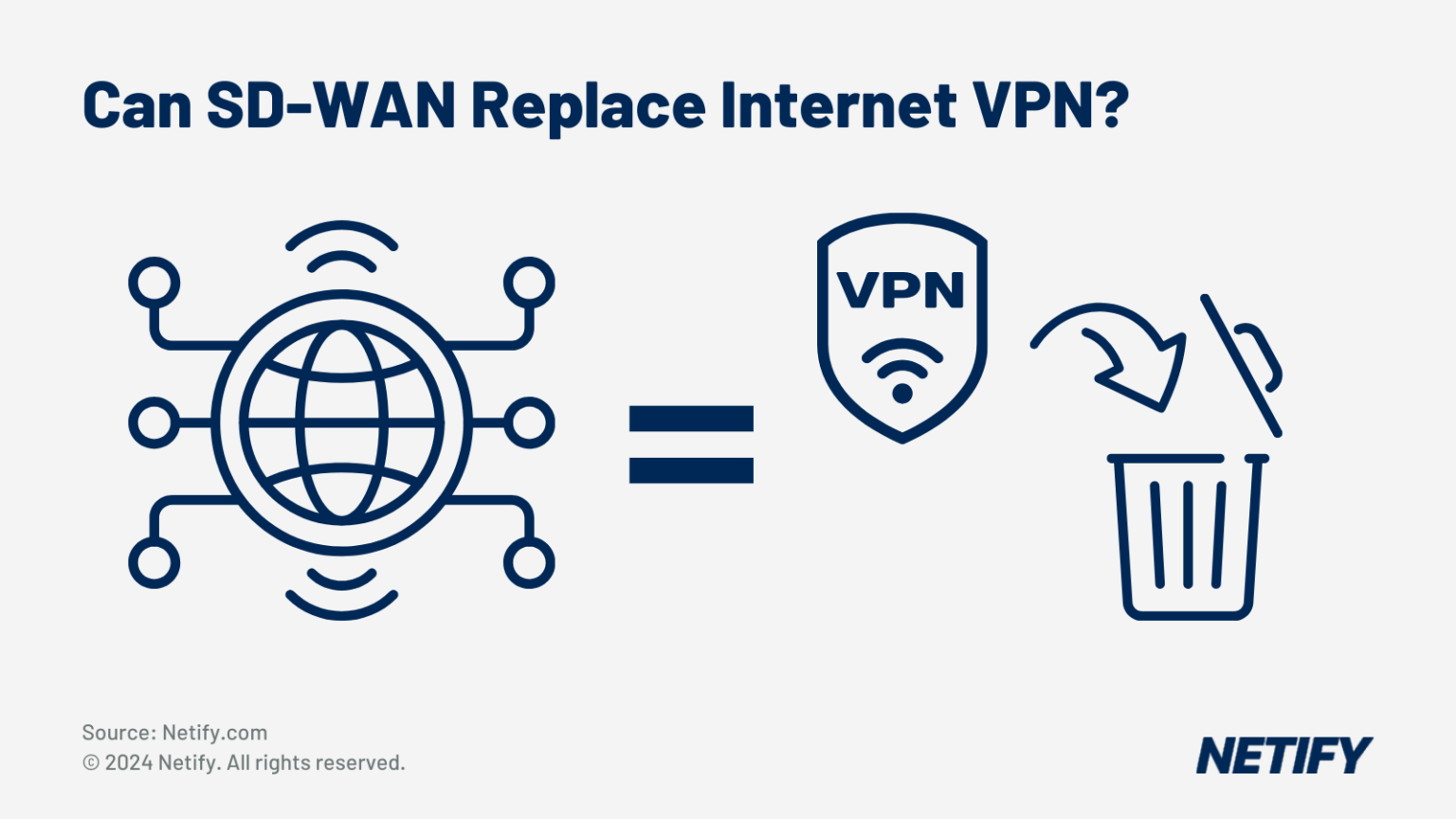
SD-WAN is a good option to replace a basic internet VPN service. In many ways, SD-WAN is an evolution of the standard IPSec VPN service, which is still used today to meet specific or simple requirements. IPSec remains a popular encryption security option for site-to-site or user-to-user requirements where there is no breakout to the public internet. For example, when an IPSec VPN is configured as "VPN-only," all unauthenticated traffic is dropped, resulting in a secure tunnel between endpoints.
Continue from this article
Describe what you need
Your first sentence is drafted from this article. Edit it, or replace it with your own words: sites, regions, what must not go down.
Drafted from this article. Everything you type stays yours to edit before you approve any next step.
Compare the research, prepare one brief and choose which suppliers Netify may approach.
Your requirements open in the private sourcing journey. Review the evidence, choose recipients and confirm your work email before Netify reviews an introduction. A full RFP can follow from the same brief.
Take these requirements into provider sourcingSupplier responses depend on the scope and the suppliers accepting the request. No supplier is contacted by opening this page.
Working with an assistant? Connect netify.co.uk/sase/api/mcp/ and use prepare_sourcing_plan with this page as context.
IPSec VPNs were widely adopted by enterprise businesses before the introduction of smartphones and public cloud applications. As a result, Enterprise VPN architecture requirements were much simpler, often resulting in a single breakout to the internet from a designated data centre or branch office location.
However, in today's world, users require constant access to public cloud resources through phones, tablets, and laptops. This transition to a cloud-based world has resulted in increasingly sophisticated threats to data from hacking. SD WAN is designed to meet these demands head-on by implementing highly secure feature sets that are consistently updated via the cloud.
Internet VPN vs SD-WAN Comparison

Robert Sturt is a leading expert in SD-WAN and enterprise network solutions with extensive experience in telecommunications and network infrastructure. As a Forbes Business Council member and contributor to TechTarget, he provides strategic insights on network transformation and digital connectivity solutions. His expertise spans SD-WAN implementation, network security, and enterprise digital transformation initiatives.
Fact-checked by: Harry Yelland - Cybersecurity Writer, Netify